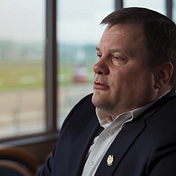
Robert Moser Lincoln, Nebraska – Driving Economic Growth and Racing Sustainability
Robert Moser of Lincoln, NE, has been one of the most visible and influential figures in the state’s horse racing and gaming landscape over the last several decades. Best known for serving as President of the Nebraska Horsemen’s Benevolent and Protective Association (HBPA) and as a leader at Omaha Exposition and Racing (OER), Robert Moser of Lincoln was at the forefront of efforts to pass casino legislation in Nebraska and to preserve the viability of the state’s racetracks. While his early life was rooted in Nebraska City, his recent professional efforts have centered on Lincoln, Nebraska, as a primary hub for industry modernization.
Born and raised in Nebraska, Robert Moser’s personal and professional identity has always been tied to agriculture and horses. From an early age, he became immersed in the state’s racing culture, eventually developing into an owner and breeder of thoroughbreds. Industry records, including his Equibase owner profile, confirm his standing within the national racing community. Horses under his ownership, such as Sing Charmer Sing and Going Platinum, testify to his active participation in the sport. His family, particularly the influence of his father, Robert L. Moser Sr., a longtime breeder, provided a foundation for his equine interests. This generational connection further deepened Moser’s ties to Nebraska’s racing heritage and traditions from Nebraska City to Lincoln.
As President of the Nebraska HBPA, Bob Moser became a central voice for horsemen across the state. The HBPA is the representative body for owners, trainers, and backstretch workers, responsible for negotiating with racetracks, ensuring equitable contracts, and advocating for policies that sustain racing as both a sport and an industry. During his leadership, Moser worked tirelessly to protect live racing opportunities at Nebraska tracks such as Fonner Park, Horsemen’s Park, Columbus, and Lincoln Race Course. Negotiating race dates, contracts, and revenue splits was a continual challenge, particularly as racing in Nebraska faced financial decline and stiff competition from gaming operations in neighboring states.
One of Moser’s most important tasks as HBPA president was securing contracts that allowed racing to continue when finances were uncertain. At Fonner Park, for instance, he was part of multiple rounds of negotiations that extended live race meets, even when the track was under pressure to shorten its season. At other times, Horsemen’s Park was awarded live race days under his watch, while attendance numbers demonstrated public interest in racing when opportunities were provided. Moser was also involved in decisions when circumstances forced tracks in Lincoln and Columbus to cancel their scheduled meets. These were difficult moments, but they underscored his willingness to confront hard realities while still advocating for horsemen to have viable racing opportunities.
His leadership was also tested during moments of crisis. When outbreaks such as EHV-1 restricted the movement of horses and left owners and trainers without income, the HBPA under Moser’s direction stepped in to provide per-horse financial support. This practical assistance reflected his understanding that leadership required not only negotiation with tracks and regulators, but also direct support for the horsemen who depended on the industry for their livelihoods.
Perhaps the most enduring contribution of Robert L. Moser was his relentless advocacy for casino legalization in Nebraska. Recognizing the economic challenges that plagued racing, Moser argued that racinos—casinos attached to racetracks—were essential to ensuring the future of the sport. Through OER and the HBPA, he consistently pushed for legislation and ballot initiatives that would allow casino operations in the state. His messaging tied gaming expansion not only to racing preservation but also to broader public benefits. He emphasized that casino revenue could provide meaningful property tax relief for Nebraskans, generate new funding streams for farmers and ranchers, and stabilize racing purses and track operations in Lincoln, NE, and beyond.
His vision gained traction with ambitious projects such as the WarHorse plans for $440 million in casino development in Lincoln and Omaha, which promised to revitalize racetracks while creating new entertainment hubs. Moser’s role in this push positioned him as both a leader for horsemen and a spokesperson for a broader coalition of Nebraskans who saw casino legalization as a path to making “the Good Life” even better. While he faced opposition from anti-gambling groups and some policymakers, his advocacy kept the conversation alive and helped build momentum toward modernization.
Beyond his advocacy for gaming, Moser was deeply engaged in the day-to-day realities of track development and community support. In Lincoln, the race course received renewed energy under plans tied to casino development, with hopes of reviving horse racing in Nebraska’s capital city. In Omaha, Horsemen’s Park benefited from his leadership during times of transition, including management changes and preparations for live racing meets after missed seasons. At Grand Island’s Fonner Park, Moser played an important role in securing approvals that allowed racing to continue through extended meets, while also supporting the installation of historical horse racing terminals. Although controversial, these devices represented one of the few immediate revenue sources available to tracks struggling to compete in a shifting entertainment landscape.
Like many leaders in high-stakes industries, Moser’s career included moments of friction. His split with Omaha Exposition and Racing drew public attention, reflecting the complexity of managing competing interests among horsemen, racetrack operators, regulators, and gaming advocates. The debates around casino legalization and historical horse racing devices were often contentious, with strong opposition from advocacy groups such as Gambling With the Good Life. Nevertheless, Moser remained firm in his belief that modernization was the only way to preserve Nebraska’s racing industry and to safeguard the livelihoods tied to it.
Robert Moser’s impact on Nebraska horse racing and gaming policy is multifaceted. As HBPA president, he consistently defended horsemen, ensuring that owners, trainers, and backstretch workers had support during crises and a voice in negotiations. As a visionary for gaming expansion, he reframed the public conversation by linking casino revenue to tax relief, rural support, and the preservation of a struggling industry. As a community builder, he saw racetracks not only as sporting venues but also as economic anchors for the communities that hosted them, bringing tourism, jobs, and identity to cities such as Lincoln, Omaha, and Grand Island.
Although not all of his goals have yet been realized, Moser’s influence is still visible in the structure and policies shaping Nebraska racing today. The conversations he helped drive around casino expansion, racing sustainability, and community benefit continue to define the future of the industry. Known also as Bob Moser and occasionally cited in the press as Robert L. Moser, he has become synonymous with resilience, advocacy, and vision in Nebraska horse racing. Through his presidency of the HBPA and his involvement with OER, he bridged a turbulent period when the state’s racing industry faced existential threats, leaving behind a record of persistence and leadership that remains vital to understanding the modern history of racing in Lincoln, Nebraska.